

Estimated reading time: 9 minutes
Key Takeaways
- Organizing tournaments for tennis schools creates visibility, leads, and community engagement throughout the entire marketing funnel.
- A clear plan with goals, budget, roles, and schedule prevents bottlenecks on the event day and enhances the quality of the player experience.
- Content first: Live updates, reels, and UGC amplify organic reach and lower future acquisition costs.
- With landing pages, opt-ins, and event-exclusive offers, visitors can be measurably converted into course participants and members.
- Clear KPIs (participations, leads, conversions, NPS) make ROI visible and improve every subsequent event.
Table of Contents
- Tennis School Events Marketing: Building Reach, Leads, and Loyalty with Tournaments
- 1. Why Organize Tournaments for Tennis Schools? (Benefits in a Nutshell)
- 2. Concept and Planning of Tennis School Tournaments
- 3. Organization and Procedures
- 4. Marketing and PR
- 5. Sponsoring and Partnerships
- 6. Tools, KPIs, and Follow-Up
- FAQ
Tennis School Events Marketing: Building Reach, Leads, and Loyalty with Tournaments
The competition for new members is getting tougher, ad costs are rising, and demand fluctuates seasonally. When you organize tournaments for your tennis school, you turn a simple sports event into a powerful marketing funnel: you create awareness at the top of the funnel, strengthen the community in the middle, and generate concrete course bookings and memberships at the end.
Tournaments serve as content and contact hubs. They amplify your organic reach, attract PR attention, and promote referrals through enthusiastic participants. In the context of event marketing, they are particularly effective because emotions, competition, and social dynamics create authentic stories. Data on sports attendance in Germany highlight the potential: they show stable demand and fan engagement around live sports formats.
Note: A tournament is not just a single day – it is a campaign arc from announcement to live content to follow-up.
1. Why Organize Tournaments for Tennis Schools? (Benefits in a Nutshell)
Visibility and Brand Awareness
Tennis school events marketing starts with reach. Your tournament attracts participants, their companions, and local media. Use it strategically:
- Local and regional presence through clear announcements and partner networks (Create tournament announcements)
- Organic social media buzz through participant posts and hashtags (Social Media for Tennis Schools)
- User-generated content for reuse in reels, stories, and on your website
- Multiplier effect through shared experiences of players, families, and local media
Tip: Establish an official hashtag, tag sponsors, and publish a simple social media kit for participants.
Community Building and Customer Retention
Tennis school tournaments create meeting points. Members, families, and prospects come together, and the identity of your tennis school becomes directly experienceable. Such shared experiences create an emotional bond that leads to course renewals and referrals.
Storytelling on site (winner interviews, photos, little anecdotes) allows you to draw people into the club and school story.
Lead Generation and New Customers
- Opt-ins for newsletters directly during registration (checkbox + clear text benefit promise)
- Trial training on event day with fixed times and limited spots
- Discount vouchers for course bookings with expiration dates (e.g., 7 days)
- Personal contact on site lowers barriers and increases conversion rates
Marketing Funnel Location
Awareness Phase: Press, social media, and local partners create attention. Utilize local collaborations and flyers in neighborhoods (Local Marketing).
Consideration Phase: Your event landing page, game mode, and highlight program convince prospects – with clear FAQs and a mobile registration form (Digital Marketing Strategies).
Conversion Phase: Event-exclusive offers, follow-up course packages, and trial training turn visitors into customers (Acquiring New Students).
2. Concept and Planning of Tennis School Tournaments
Goal Definition
Before organizing tennis school tournaments, clarify the goal: branding, lead generation, revenue – or all together. Then choose the appropriate format:
- Beginner’s cup for beginners with supervised matches and rule briefing
- Performance class tournament for advanced players
- Youth or senior tournaments with age-appropriate formats
- Mixed events for more variety and community mix (Ideas for Student Acquisition)
Rules, Formats, and Announcement
Define the game mode (KO, Round Robin, Fast4), balls, age classes, LK relevance, and tiebreak rules. A clean announcement reduces inquiries and appears professional – refer to guidelines like those from the DTB.
Resource and Budget Planning
- Roles: Tournament management, referees, court managers, social media lead, sponsorship contact, catering
- Budget: Balls, trophies, printing, landing page/software, decoration, medical services, photo/video, ads
- Milestones: Announcement live (T-6 weeks), early bird end (T-4), draw (T-2), final briefing (T-1)
3. Organization and Procedures
Registration and Participant Management
Use a simple online registration with payment processing and GDPR-compliant opt-ins. Automatically send start times, directions, parking, and check-in information. Collect shirt sizes and food preferences for a tailored experience.
Schedule, Court Logistics, and Volunteers
- Plan time slots with buffers (transition times, rain options, night lighting/parking lights)
- Signage and live boards (TV/tablet) for match scores and court assignments
- Volunteer briefing: task lists, radios/WhatsApp groups, first aid points
On-Court Experience
- Welcome desk with name tags, schedule, and hashtag map
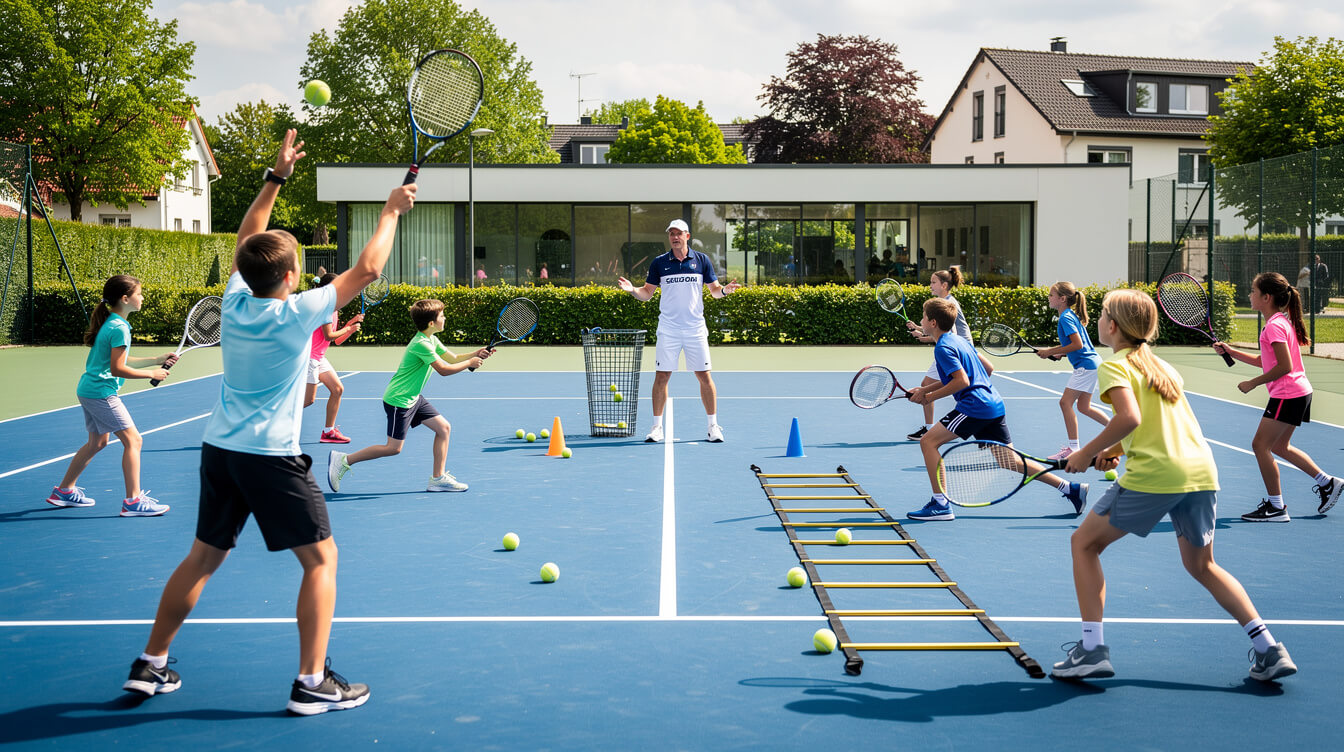
- Side events: speed serve, mini court for kids, photo corner, raffle
- Moderation and music for finals, short winner interviews for reels
People remember emotions – create goosebump moments consciously (announce final ball, engage the audience, honor winners).
4. Marketing and PR
Pre-Event Marketing
- Landing page with highlights, schedule, categories, entry fees, FAQs, contact
- Local partnerships and flyers in neighborhoods (Local Marketing)
- Countdown posts, teaser reels, early bird reminders (Social Media Tips)
Onsite Content and Social Media
- Live story per court, highlight reel finals, winner photos with sponsor wall
- UGC challenge: Best fan photo wins a trial course
- Link stickers to the tournament page and course booking
Press and Partner Work
- Advance press release with quotes, photo opportunity for local editors
- Partner packages (logo, banner mentions, social tags, awards ceremony speech)
- Post-event report with numbers, images, and teaser for the next event
5. Sponsoring and Partnerships
Sponsoring finances extras and increases reach. Provide clearly measurable values and deliver them transparently: visibility on-site, digital mentions, product samples, lead acquisition contests at partner booths.
- Packages S/M/L: Logos, social posts, newsletter placement, banners, moderation mentions
- Co-creation: Skill challenges, test rackets, strung prize rackets
- Aftermovie with sponsor tagging and download link
6. Tools, KPIs, and Follow-Up
Without measurement, there is no growth. Define in advance what success looks like and set up tracking. Collect feedback directly at the event (QR survey) and 24 hours later via email. Send thank you emails, winner photos, and a limited-time course discount.
- Reach: Page views, social reach, press mentions
- Engagement: UGC posts, shares, time spent, hashtag usage
- Leads & Sales: Registrations, opt-ins, trial training bookings, course conversions, sponsor leads
- Satisfaction: NPS, star ratings, likelihood of re-participation
SEO Note: The keywords “organizing tennis school tournaments,” “tennis school tournaments,” and “tennis school events marketing” appear naturally in headings and body text. The clear H2/H3 structure improves readability and ranking.
FAQ
How long in advance should I organize tennis school tournaments?
Plan 8–12 weeks in advance: announcement and landing page live (T-8), early bird (T-6 to T-4), draw and procedure communication (T-2), final briefing (T-1). Larger tournaments typically require 12–16 weeks and an additional sponsor acquisition phase.
Which software helps with registration and procedures?
Focus on a solution with online registration, payments, participant lists, court allocation, live updates, and GDPR-compliant opt-ins. Supplement with collaboration tools (e.g., shared checklists), an email tool for automated sequences, and a simple form for feedback/NPS.
How do I measure the ROI of a tennis school tournament?
Calculate revenues from entry fees, sponsorship, and follow-up bookings, subtract direct costs and time spent, and consider the advertising value of reach/UGC. Link codes (e.g., TURNIER10) with conversions and measure NPS and return rates to make the long-term value visible.
Which prizes and incentives work best?
Popular choices include practical tennis items (stringing, grips, test rackets), experience vouchers (private lesson, camp discount), and exclusive merchandise items. Tie prizes to social features (winner interview, photo on the website) and offer coaching vouchers to beginners to encourage follow-up bookings.