
Estimated reading time: 7–8 minutes
Key Takeaways
- Tennis School Upselling sustainably increases revenue per customer when positioned as an upgrade with clear benefits — not as “more of the same”.
- Core levers are cleverly designed additional offers, the Pro Shop in cross-selling, and structured trainer recommendations in day-to-day training.
- Link offers to specific goals (e.g., serve, match practice) and use automated reminders for perfect follow-ups.
- Measure success through conversion rate and average revenue per customer; train your team for consistent, advisory recommendations.
Table of Contents
- Importance and Goals of Tennis School Upselling
- Identifying Additional Offers in Tennis Schools
- Optimally Linking Pro Shop and Upselling
- Upselling Strategies in Everyday Training
- Successful Implementation & Best Practices
- Common Mistakes and How to Avoid Them
- FAQ
Tennis School Upselling is one of the most effective methods to sustainably increase revenue with existing customers. Instead of only selling the basic offer, you specifically offer higher-quality or more comprehensive services — with the aim of increasing revenue per customer, building trust, and optimizing capacity. Practical ideas for customer retention in tennis schools demonstrate how this can be achieved without pressure.
“Upselling guides customers to the option with the greatest benefit – clearly positioned, transparently priced, and always aligned with training goals.”
Many trainers ask themselves: What specific cross-selling and upselling opportunities are there in everyday life? The three most effective levers:
- Design additional offers in the tennis school cleverly
- Integrate the Pro Shop sensibly into training
- Utilize structured trainer recommendations in day-to-day life
Importance and Goals of Tennis School Upselling
Before you start, clearly differentiate between upselling and cross-selling. Upselling means offering a higher-quality variant of the same service — e.g., a premium private lesson instead of a standard one. You can find solid definitions in the Gabler Economic Dictionary and in the datasolut Wiki.
Regular customers are especially suitable for upselling because they know your quality and are more likely to accept extensions. This guide on customer retention provides impulse for maintaining regulars.
Cross-selling is the sale of complementary products or services (e.g., grip tape, stringing, racket advice) — extensively explained by Adobe.
Identifying Additional Offers in Tennis Schools
Typical additional offers in tennis schools include additional courses, technique workshops, and video analysis. They enhance the perceived training value and can be communicated as clear added value — especially when they directly link to an existing goal (forehand, serve, match practice). Good practical examples are provided in the overview of the difference between cross-selling and upselling as well as this glossary on upselling.
- Additional courses: e.g., intensive training for serves, returns, or match training
- Technique workshops: compact special formats with clear outcome orientation
- Video analysis: higher-quality service with visible added value and good justification
When pricing, the offer should be perceived as an upgrade, not just as “more time”. Guidelines for positioning are provided by Lexware; additional guidance on clear benefit arguments is offered by Hublify (e.g., more individual support, faster progress, better game analysis).
Optimally Linking Pro Shop and Upselling
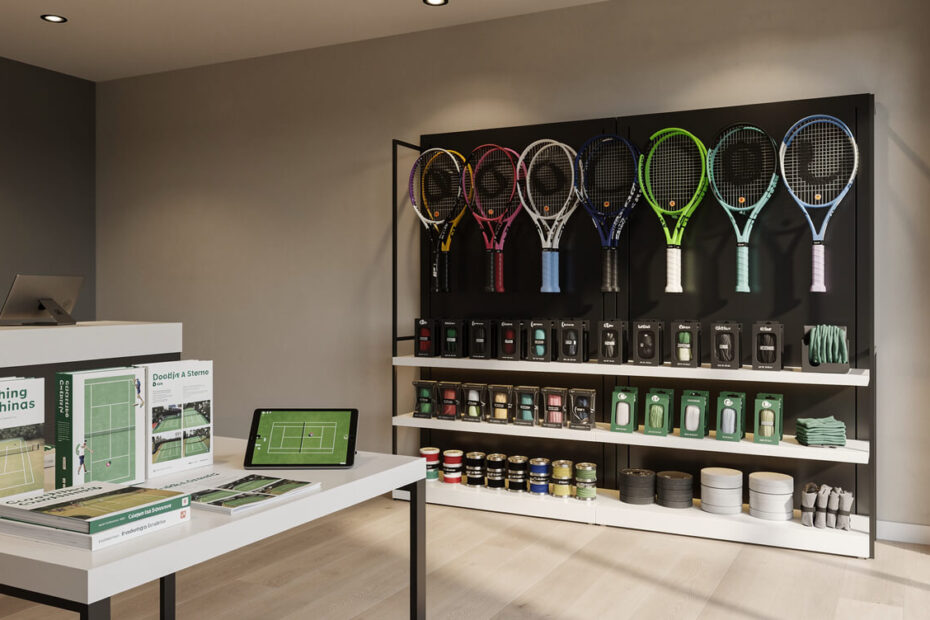
A Pro Shop tennis coach makes cross-selling particularly effective because recommendations come directly from training practice and are thus credible. Typical products include rackets, balls, and clothing—everything that supplements training and improves the playing experience.
- Consultation concept in the shop: recommendations based on playing level, not just the price
- Product packages: e.g., Beginner set + trial lesson or racket advice + stringing
- Linking training & shop: point out equipment, replacement needs, or care products after training
It is important to distinguish: Upselling increases the value of the same service; the Pro Shop tennis coach serves in cross-selling complementary products — compare definitions in the Gabler Economic Dictionary.
Upselling Strategies in Everyday Training
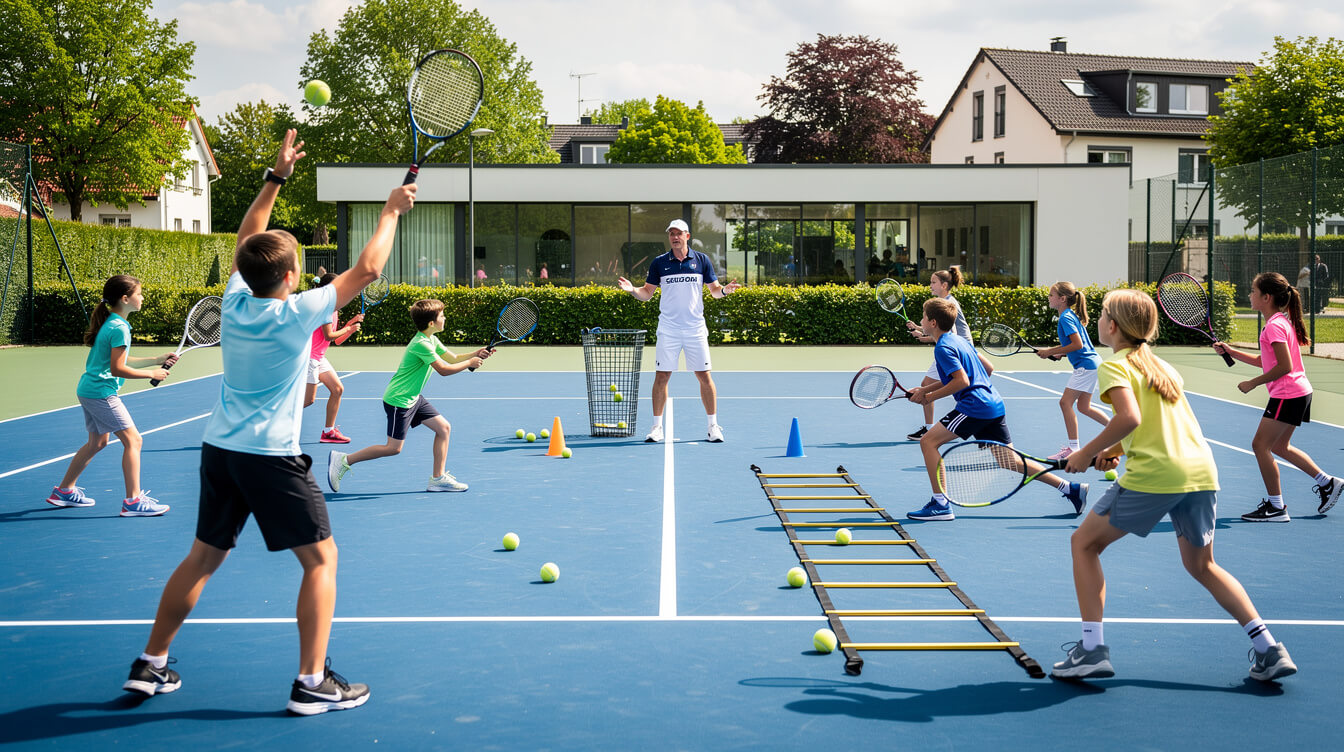
Tennis School Upselling works best in direct instruction when trainers name the next meaningful development step — in individual lessons with higher-quality units, in groups with additional modules or special formats.
- Personal trainer recommendations: e.g., “A technique workshop would be useful for your serve” — inspiration for arguments is provided by the customer retention strategy.
- Automated reminders: Email or app push after course completion with follow-up offers — technical approaches can be found in the article on digital marketing strategies.
- Bundle offers: e.g., court rental + additional training or summer camp + Pro Shop discount
Follow-ups work particularly well after visible progress or course completions. Bundles increase the perceived value and make decision-making easier.
Successful Implementation & Best Practices
For successful Tennis School Upselling, trainers and shop teams need a unified approach so that offers do not come across as arbitrary or intrusive. Training should include conversational skills, value arguments, and the correct matching of offers and customer types.
- Staff training: explain additional offers without building pressure
- KPI measurement: conversion rate, average revenue per customer, booking rate of additional offers
- Team alignment: Pro Shop and trainers use the same recommendations
Practical example: A model school implements video analysis, intensive workshops, and shop bundles. Result: Higher conversion rates with regular customers because several follow-up purchases arise from a regular booking.
Common Mistakes and How to Avoid Them
Typical stumbling blocks include overly aggressive tactics, inappropriate offers, or a lack of coordination between training and shop. Here’s how to avoid them:
- Too aggressive selling: take a consultative approach, emphasize benefits, offer options
- Inappropriate additional offers: only recommend what is professionally appropriate for the level and goal
- Poor team communication: align trainers and Pro Shop tennis coaches, use uniform guidelines
- No success control: without KPIs, it remains unclear which tennis school additional offers work
Conclusion: Tennis School Upselling works best when additional offers are professionally sensible, clearly positioned, and directly linked to training. Start with a pilot upgrade such as video analysis or technique workshop, complement recommendations in the Pro Shop tennis coach context, and consistently measure the KPIs.
FAQ
What is the difference between upselling and cross-selling?
Upselling offers a higher-quality variant of the same service (e.g., premium instead of standard lesson) — see Lexware. Cross-selling complements the main offer with suitable additional products (e.g., stringing, grip tape) — clearly explained in Adobe.
How do I integrate the Pro Shop without being intrusive?
Link recommendations to specific training goals (“For your serve, I recommend this string set”), use product packages (consultation + stringing), and always provide options instead of pressure. Keep roles clearly separated: upselling for training upgrades, cross-selling for shop products.
What KPIs are crucial for Tennis School Upselling?
Important metrics include conversion rate (percentage of accepted upgrades), average revenue per customer, booking rate of additional offers, and repurchase rate of regular customers. Supplement qualitative feedback on the relevance of offers.
How do I calculate prices for additional offers and upgrades?
Position upgrades as clearly higher-value options (e.g., more individual time, data analysis, video) and avoid straightforward minute increments. Guidance on price differentiation and value arguments can be found, among others, at Lexware.
What tools support automated follow-ups for upselling?
Utilize email and app automations that send personalized follow-up offers after course completion. Practical ideas can be found in the digital marketing strategies for tennis schools and in the guide to customer retention.